
Granulation Machinery / Material Handling Bins
IPC Bins
Integrated Process Container for stainless steel powder storage, internal batch transfer and controlled discharge. Engineered by Technogen Enterprise, Ahmedabad, India.
ISO 9001:2015Ahmedabad, IndiaManufacturer - Exporter
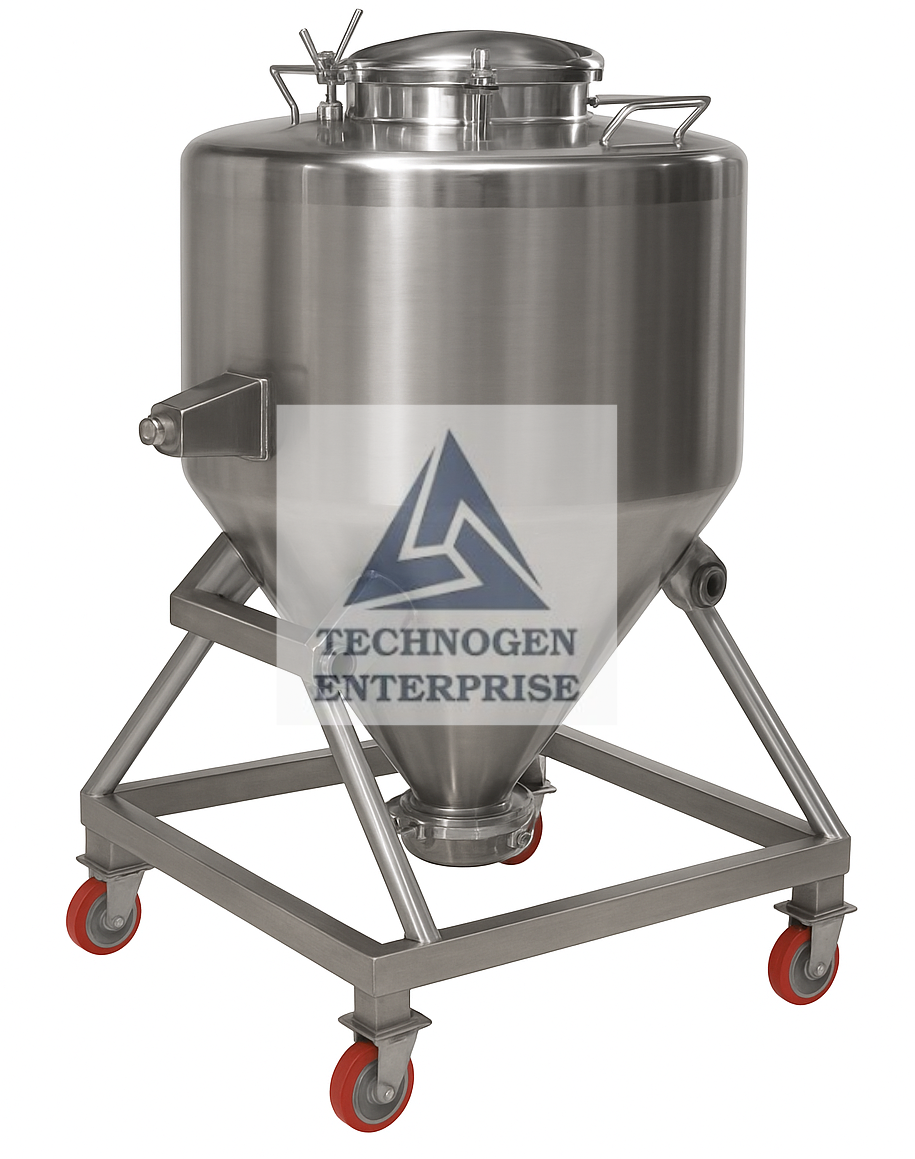
IPC BinsMachine image shown for reference. Final configuration is selected against the approved application and production requirement.
01
Machine Overview
IPC Bins (Integrated Process Containers) provide a practical means of storing and transferring dry powders, granules and processing intermediates between stages of a manufacturing operation. Technogen Enterprise is an Ahmedabad-based manufacturer, supplier and exporter of IPC Bins for pharmaceutical, nutraceutical, food and chemical facilities. The containers help organise batch movement while reducing unnecessary open handling of ingredients within production areas.
The supplied design information describes stainless steel product-contact construction, typically SS 316, with smooth internal and external surfaces to support cleaning. The available capacity range is stated as 60 to 1200 litres, with cylindrical and square or polygonal forms available to suit site handling and equipment interfaces. Butterfly valves support controlled discharge, while castor wheels provide mobility for internal material movement. Depending on process needs, a project may also require container sealing, batch identification and an interface to loading or unloading stations.
An IPC Bin must be chosen as part of the wider material-handling system rather than simply by its nominal capacity. Critical considerations include powder density, target batch mass, discharge valve arrangement, access clearances, cleaning practice and compatibility with lifting, docking or charging equipment. Technogen Enterprise can review these requirements and propose a configuration for traceable batch transfer and powder containment without claiming a particular containment performance that has not been specified.
02
Applications
03
Operating Principle
An IPC Bin is a passive material-handling container, not a driven mixing machine. Its operating sequence involves controlled product loading, closure, movement to the next manufacturing stage and discharge through a suitably arranged outlet. The exact process depends on the site's charging and docking equipment.
Charging and Identification
Powders or granules are introduced through the designated upper opening. The correct batch identity, material grade and fill quantity should be recorded according to the facility's operating procedure.
Closing and Containment
After loading, the specified lid and seals are secured to minimise unnecessary exposure during internal movement. A sealing design must be selected for the actual product and site containment needs.
Internal Transfer
The container is moved on its castors or transferred by the plant's compatible handling equipment. Route clearance, floor conditions and safe handling limitations are considered when choosing a bin size.
Docking and Controlled Discharge
At the receiving location, the bin is positioned above an appropriate transfer or charging interface. The butterfly valve is operated to discharge material into the next process step.
Cleaning and Reuse
The emptied bin is inspected, cleaned and released for the next batch in accordance with the manufacturing facility's cleaning and segregation procedures.
Process Selection Consideration
The chosen bin size must permit secure transport and compatibility with the receiving station. For potent ingredients, containment and transfer requirements require a separate engineering review of the closure and docking arrangement.
04
Salient Features
Integrated process container for powder and granule handling
Nominal capacity range of 60 to 1200 litres
SS 316 product-contact surfaces described
Cylindrical and square or polygonal bin configurations
Smooth welded and polished surfaces for cleaning
Castor-equipped design for internal material movement
Butterfly valve for controlled discharge
Batch identification and marking options
Configurations tailored to plant handling equipment
Sealed-lid arrangements depending on specification
05
Technical Specifications
Final specifications may vary with container size, product characteristics, selected model and approved configuration.
| Parameter | Documented configuration |
|---|---|
| Equipment type | Integrated Process Container for powder and granule transfer |
| Nominal capacity range | 60 to 1200 litres |
| Shapes | Cylindrical and square/polygonal |
| Product-contact material | SS 316 |
| Surface finish | Smooth polished interior and exterior |
| Movement | Castor wheels |
| Discharge | Butterfly valve |
| Available options | Custom shapes, closures, batch identification, monitoring arrangements |
06
Add-On Features
Airtight sealing and locking arrangement
Temperature and humidity monitoring configuration
Stackable configuration when suitable
Alternative container shape and capacity
Special surface finishing, including electropolishing as specified
Batch label and identification accessories
07
Applicable Industries
08
Frequently Asked Questions
What is the purpose of an IPC Bin?
An IPC Bin stores and moves powders or granules between manufacturing steps in a defined batch container. It can help reduce repeated open transfers and supports organised material flow.
What sizes are offered?
The supplied information specifies capacities from 60 to 1200 litres. Custom configurations are discussed, but the precise usable fill volume must be agreed for each application.
Which material is used for product-contact parts?
The product specification describes SS 316 contact construction. Final stainless steel grade, finish and gasket materials should be confirmed in the purchase specification.
How is material discharged?
The stated design uses a butterfly valve that allows product to be released into a suitable receiving or docking arrangement. The valve dimensions and outlet interface are project-specific.
Are IPC Bins suitable for every containment requirement?
No specific dust-containment classification is provided. Sites handling potent or hazardous powders should define the required containment level and verify the proposed bin and docking arrangement against that requirement.
Related Machinery
Continue building your line.
Drying Machines
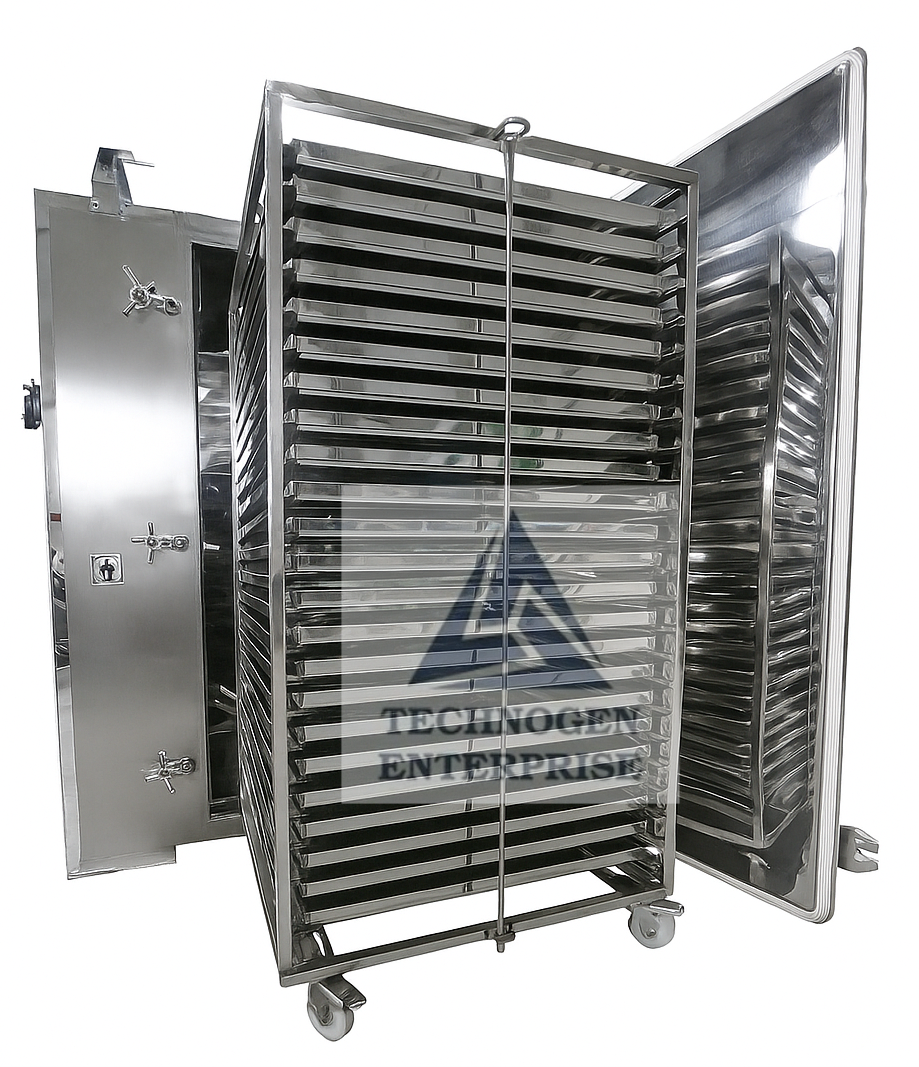
Air Tray Dryer
Insulated batch hot-air tray dryer with TGTD-24, TGTD-48 and TGTD-96 configurations. Engineered by Technogen Enterprise, Ahmedabad, India.
Blending Machines
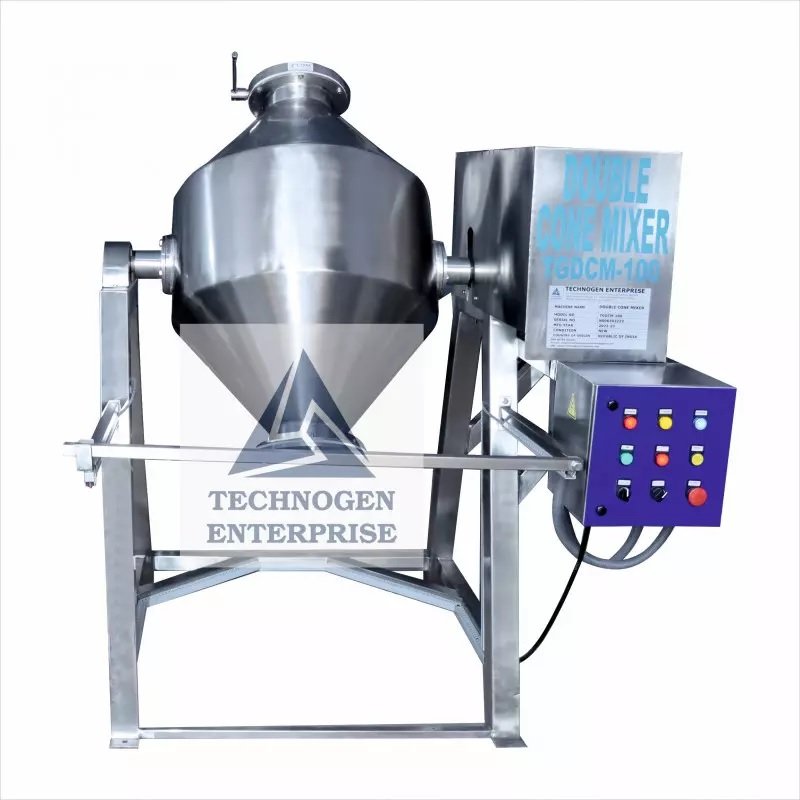
Double Cone Blender
Dry powder and granule blender with double-conical rotating chamber and model-dependent stainless steel construction. Engineered by Technogen Enterprise, Ahmedabad, India.
Drying Machines
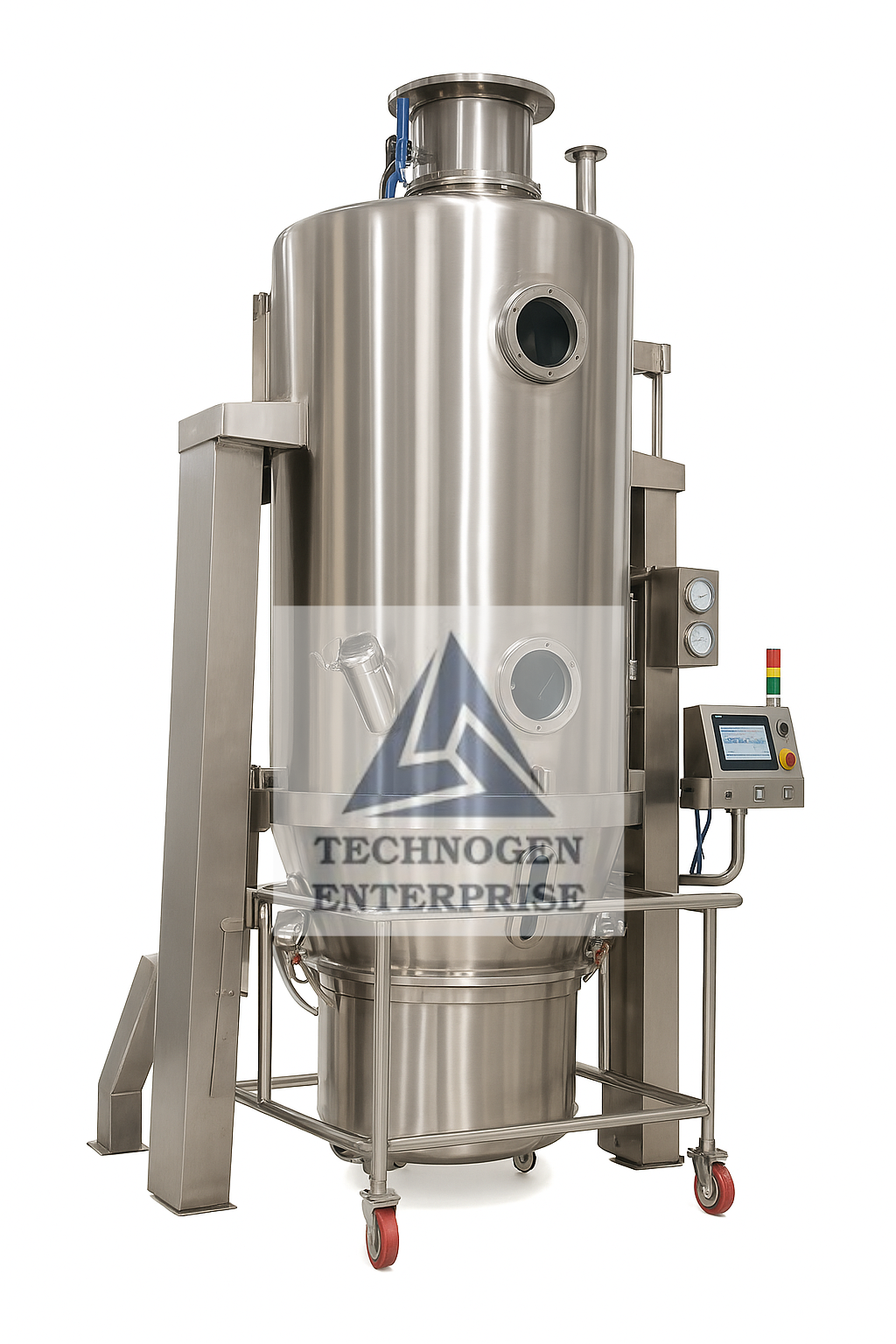
Fluid Bed Dryer
Fluidised-bed batch dryer for granules and powders with TGFBD models and controlled heated airflow. Engineered by Technogen Enterprise, Ahmedabad, India.
Request Technical Quote
Discuss IPC Bins with our engineering team.
Provide required bin volume, product bulk density, discharge valve arrangement and docking requirements for an IPC Bin offer.